
We ship every day, except on weekends and the Shipping Holidays listed below.
The time it takes us to process and ship your order is typically 1-2 business days.
The table below shows typical delivery times after shipment for Express Mail Service (EMS), FedEx, and Standard Air, based on our most recent average delivery data.
These times are estimates only and not guaranteed delivery dates. Delivery may take longer due to weather disruptions, customs delays, backlogs in your local postal system, or other interruptions beyond our control.
Estimated Delivery
For our frequent shipping destinations
| Shipped Via ▹ Est. Arrival ▹ |
EMS (business days) |
FedEx (business days) |
Standard Air (weeks) |
North America |
|||
| USA | 7-14 | 3-5 | 2-4 |
| Canada | 7-14 | — | 2-4 |
| Mexico | 8-12 | — | 4-8 |
Europe |
|||
| UK | 7-14 | — | 2-4 |
| Germany | 7-14 | — | 2-4 |
| France | 7-14 | — | 2-4 |
| Switzerland | 7-14 | — | 2-4 |
| Italy | 7-28 | — | 4-6 |
| Luxembourg | 7-14 | — | 2-4 |
| Romania | 7-28 | — | 4-6 |
| Greece | 7-28 | — | 4-6 |
| Spain | 7-28 | — | 4-6 |
| Austria | 7-14 | — | 2-4 |
| Belgium | 7-14 | — | 4-6 |
| Denmark | 7-14 | — | 2-4 |
| Finland | 7-14 | — | 2-4 |
| Netherlands | 7-14 | — | 2-4 |
| Sweden | 7-14 | — | 2-4 |
| Norway | 7-14 | — | 2-4 |
| Portugal | 7-28 | — | 4-8 |
| Iceland | 7-28 | — | 4-8 |
| Slovenia | 7-14 | — | 4-6 |
| Hungary | 7-14 | — | 4-6 |
| Slovakia | 7-14 | — | 4-6 |
| Lithuania | 7-14 | — | 4-6 |
East Asia |
|||
| Singapore | 4-10 | — | 2-4 |
| South Korea | 4-10 | — | 2-4 |
| Philippines | 4-14 | — | 4-6 |
| Malaysia | 4-28 | — | 2-4 |
| China | 4-10 | — | 2-4 |
| Thailand | 4-10 | — | 4-8 |
| Hong Kong | 4-10 | — | 4-8 |
| Macao | 4-10 | — | 4-8 |
| Taiwan | 4-10 | — | 4-8 |
| Viet Nam | 4-28 | — | 4-8 |
South Asia |
|||
| India | 7-28 | — | 4-8 |
Oceania |
|||
| Australia | 7-14 | — | 2-4 |
| New Zealand | 7-14 | — | 2-4 |
Middle East |
|||
| UAE | 7-28 | — | 4-8 |
| Qatar | 7-28 | — | 4-8 |
| Saudi Arabia | 7-28 | — | 4-8 |
| Israel | 7-28 | — | 4-8 |
| Jordan | 7-28 | — | 4-8 |
| Kuwait | 7-28 | — | 4-8 |
South America |
|||
| Argentina | 7-28 | — | 4-8 |
| Brazil | 7-28 | — | 4-8 |
| Colombia | 7-28 | — | 4-8 |
Africa |
|||
| South Africa | 7-28 | — | 4-8 |
Shipping Calendar and Japanese Holiday Guide
We ship every day, except on weekends and the dates listed below.
2026
In 2026, our longest closure periods are New Year (1-2 Jan), Golden Week (3-6 May), Obon (13-14 Aug), Silver Week (21-23 Sep), and year-end (30-31 Dec).
- 1 Jan Thursday - New Year's Holiday
- 2 Jan Friday - New Year's Holiday
- 12 Jan Monday - Coming of Age Day
- 11 Feb Wednesday - National Foundation Day
- 23 Feb Monday - The Emperor's Birthday
- 20 Mar Friday - Vernal Equinox Day
- 29 Apr Wednesday - Shōwa Day
- 3 May Sunday - Constitution Memorial Day
- 4 May Monday - Greenery Day
- 5 May Tuesday - Children's Day
- 6 May Wednesday - Constitution Memorial Day (observed)
- 20 Jul Monday - Marine Day
- 11 Aug Tuesday - Mountain Day
- 13 Aug Thursday - Obon Holiday
- 14 Aug Friday - Obon Holiday
- 21 Sep Monday - Respect for the Aged Day
- 22 Sep Tuesday - Bridge Holiday (between holidays)
- 23 Sep Wednesday - Autumnal Equinox Day
- 12 Oct Monday - Sports Day
- 3 Nov Tuesday - Culture Day
- 23 Nov Monday - Labor Thanksgiving Day
- 30 Dec Wednesday - New Year's Holiday
- 31 Dec Thursday - New Year's Holiday
Japan's National Holidays and Seasonal Traditions
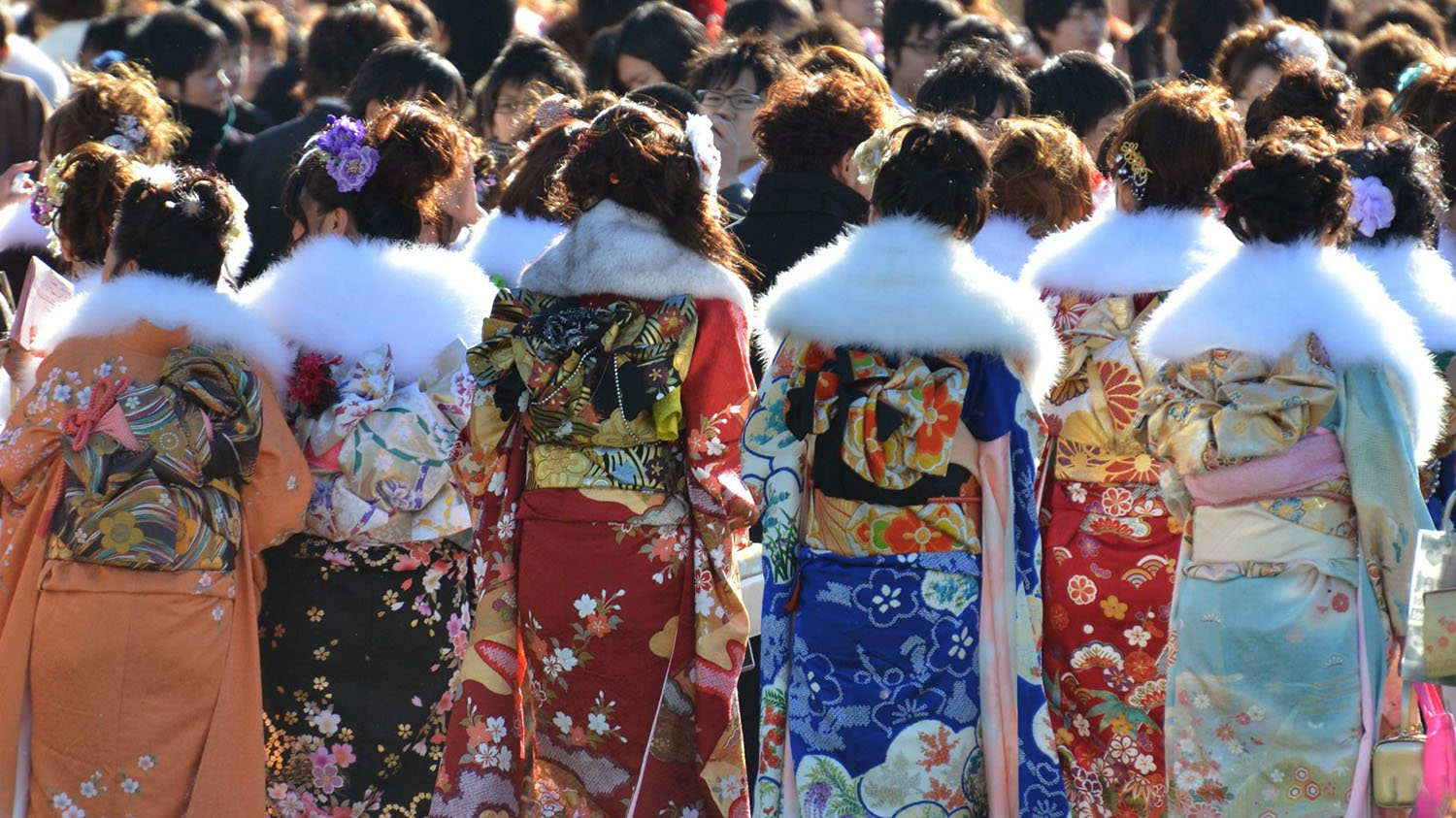
Japanese national holidays are steeped in tradition and play a significant role in the country's cultural calendar. While these holidays punctuate the year with moments of celebration and reflection, they also affect the operational timings of businesses, including our shipping services.
The dates for Japanese national holidays that fall on a specific day of the week, rather than a fixed calendar date, vary each year. This is because some holidays are observed under a 'Happy Monday System' that Japan introduced to create three-day weekends. Here are some examples:
- Coming of Age Day is observed on the second Monday of January.
- Marine Day is on the third Monday of July.
- Respect for the Aged Day is celebrated on the third Monday of September.
- Sports Day is on the second Monday of October.
Equinox holidays are determined by astronomical observations and vary slightly from year to year. They also reflect Japan's traditional awareness of the changing seasons, which is preserved in the Nijūshi Sekki (Twenty-Four Seasonal Divisions).
Here's a glimpse into the essence of these holidays and when they are observed.
- Coming of Age Day (成人の日 Seijin no Hi)
- Observed on the second Monday of January, this day celebrates young people turning 20, marking their official entry into adulthood.
- National Foundation Day (建国記念の日 Kenkoku Kinen no Hi)
- On February 11th, this holiday honors the mythical foundation of Japan and the accession of its first Emperor, Jimmu.
- The Emperor's Birthday (天皇誕生日 Tennō Tanjōbi)
- The current emperor's birthday, February 23rd, is a national celebration with public ceremonies.
- Vernal Equinox Day (春分の日 Shunbun no Hi)
- Typically falling on or around March 20th, this holiday signifies the arrival of spring and is associated with the natural world's rejuvenation.
- Shōwa Day (昭和の日 Shōwa no Hi)
- April 29th is the beginning of Golden Week, reflecting on the Shōwa era, a period of intense upheaval and subsequent reconstruction.
- Constitution Memorial Day (憲法記念日 Kenpō Kinenbi)
- May 3rd marks the promulgation of Japan's post-war constitution, an integral part of Golden Week.
- Greenery Day (みどりの日 Midori no Hi)
- On May 4th, this day is dedicated to appreciating nature's beauty, contributing to Golden Week’s festive spirit.
- Children's Day (こどもの日 Kodomo no Hi)
- May 5th is set aside for the happiness and well-being of children, completing Golden Week with colorful carp streamers and family celebrations.
- Marine Day (海の日 Umi no Hi)
- Celebrated on the third Monday of July, this holiday appreciates the ocean's bounty and Japan's maritime history.
- Mountain Day (山の日 Yama no Hi)
- August 11th is the newest addition to the holiday calendar, encouraging people to enjoy and honor the nation's mountainous landscapes.
- Obon (お盆)
- Usually observed in mid-August, Obon is a traditional period for honoring deceased family members and ancestors. Although it is not a national holiday, many people return to their hometowns, and businesses may close or operate on reduced schedules.
- Respect for the Aged Day (敬老の日 Keirō no Hi)
- On the third Monday of September, this holiday pays homage to the elderly, with communities often holding celebrations to honor their senior members.
- Autumnal Equinox (秋分の日 Shūbun no Hi)
- Observance of this holiday varies around September 22nd or 23rd, marking the changing seasons with family gatherings and visits to ancestral graves.
- Sports Day (スポーツの日 Supōtsu no Hi)
- On the second Monday of October, this holiday promotes sports and an active lifestyle while commemorating the 1964 Tokyo Olympic Games.
- Culture Day (文化の日 Bunka no Hi)
- November 3rd is a celebration of culture, the arts, and academic endeavor, with various events hosted throughout the country.
- Labor Thanksgiving Day (勤労感謝の日 Kinrō Kansha no Hi)
- Marked on November 23rd, this holiday is a modern manifestation of the ancient harvest festival, now celebrating labor and giving thanks for productivity.