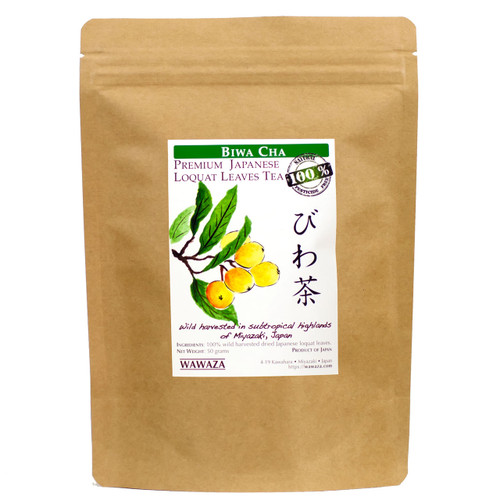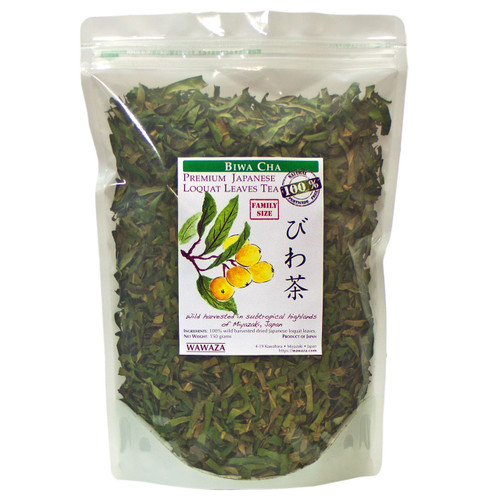
Biwa leaves have long been valued in Japanese herbal practice for respiratory, skin, and general wellness. Traditionally, they have been used for cough and phlegm and in herbal baths for irritated skin, including heat rash and eczema.
Modern research has also investigated naturally occurring compounds in biwa leaves for anti-inflammatory, antitussive, blood-sugar, and lipid-related activity. See the references below.
This traditional Japanese herbal tea has a mild, earthy taste with a subtle hint of sweetness.
- Boost Immunity & Respiratory Health
- Soothe Skin Irritations & Swelling
- Help Maintain Healthy Blood Sugar
- Promote Healthy Cholesterol Levels
Easy to prepare. See how below.
Serve hot, cold, or over ice.
Wild-Harvested • All-Natural
Pesticide-free. Prepared from freshly picked leaves and cut in strips in traditional tanzaku-giri (短冊きり) style for optimal brewing.
Product Details
Type: Herbal
Region: Miyazaki Prefecture, Japan
Caffeine: None
Flavor: Mild and earthy with subtle hint of sweetness
Color: Light reddish brown
Ingredients: 100% Japanese loquat leaves (Eriobotrya japonica)
Net Weight: 150 g
Product of Japan
About Biwa
Biwa, also known as loquat or Japanese medlar, is an evergreen tree native to southern Japan that commonly grows to a height of about 5 meters.
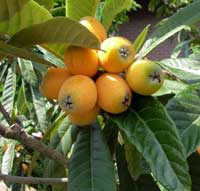 The flowers are sweetly fragrant. It produces juicy tangerine-colored fruits with delicate flesh and a pleasantly tart taste. Its long leaves (15-25 cm) are shiny on top with tiny hairs on their undersides.
Biwa leaves are listed for their beneficial properties in the Japanese Pharmacopoeia (Nippon Yakkyoku-hō), the official record of approved herbal remedies published by the Japanese government since 1886.
How to Brew Biwa Cha
Quick Brew Method
The following instructions are for making 4 cups (800 ml total).
- Add 5 g (2 heaping tablespoons) of biwa leaves to a pot.
- Add 4 cups of near-boiling water.
- Brew for about 3 minutes.
- Strain and serve hot, cold, or over ice.
Traditional Brew Method
This traditional Japanese brewing method, called senjiru, yields a deeper infusion.
- Pour a little more than 4 cups of cold water into a pot.
- Add 2 heaping tablespoons of biwa leaves.
- Heat to a full, rolling boil.
- Turn the heat down and simmer for 10 minutes.
- Turn the heat off and wait for 10 minutes.
- Strain and serve.
References
- Japanese Pharmacopoeia — 17th Edition. Japan Pharmaceuticals and Medical Devices Agency.
- Anti-inflammatory and Antitumor-Promoting Effects of the Triterpene Acids from the Leaves of Eriobotrya japonica — Biological & Pharmaceutical Bulletin. 2005 Oct;28(10):1995-9.
- Antitumor activity of compounds isolated from leaves of Eriobotrya japonica — Journal of Agricultural and Food Chemistry. 2002 Apr 10;50(8):2400-3.
- Studies on constituents of triterpene acids from Eriobotrya japonica and their anti-inflammatory and antitussive effects — Journal of Chinese Pharmaceutical Sciences 38(10):752-757, Oct 2003.
- The antitussive, expectorant and anti-asthmatic activities of triterpene acids of loquat leaves in mice and guinea-pigs — Acta Universitatis Medicinalis Anhui, 2006.
- Hypoglycemic effects of sesquiterpene glycosides and polyhydroxylated triterpenoids of Eriobotrya japonica — Planta Medica 1991, 57(5):414-416.
- Tormentic Acid, a Major Component of Suspension Cells of Eriobotrya japonica, Suppresses High-Fat Diet-Induced Diabetes and Hyperlipidemia — Journal of Agricultural and Food Chemistry, 2014, 62 (44), pp. 10717–10726.