Yomogi has been valued in Japan for centuries for its pleasant taste and traditional health and wellness uses, and is often regarded as a “wonder plant.”
Traditionally associated with women’s wellness, beauty, and reproductive health, its leaves have long been used in Japanese herbal preparations, foods, and wellness practices.
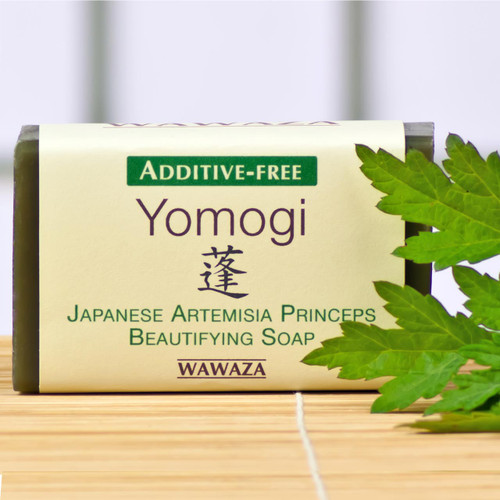
Yomogi extract is widely used in modern skincare formulations as a skin-conditioning ingredient. Its naturally occurring antioxidant and anti-inflammatory compounds, along with several other bioactive constituents, continue to be subjects of scientific study. See the references below.
- Alleviate Inflammatory Skin Conditions
- Boost Skin’s Renewal Cycle
- Promote Wellness & Reproductive Health
- Provide Antioxidant Protection & Neutralize Free Radicals
Easy to prepare. See how below.
Serve hot, cold, or over ice.
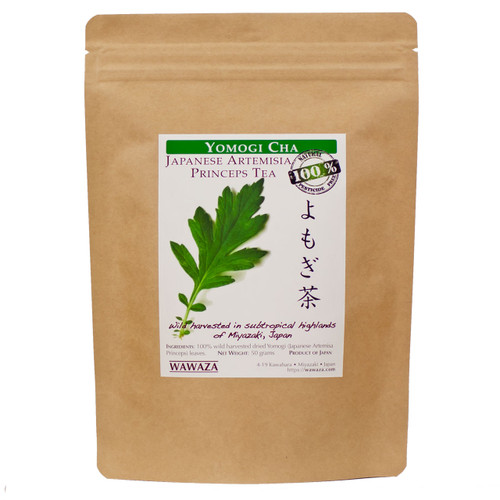
Wild-Harvested • All-Natural
Pesticide-free. Freshly picked, sun-dried leaves, uncrushed for optimal quality.
Product Details
Type: Herbal
Region: Miyazaki Prefecture, Japan
Caffeine: None
Flavor: Refreshing, grassy-lemony undertones
Ingredients: 100% Japanese Yomogi (Artemisia princeps) leaves
Net Weight: 50 g
Product of Japan
About Yomogi
Japanese culture has a long affection for yomogi. Beyond tea, it is used to make sweet mochi rice cakes (yomogi-mochi), for herbal baths (yomogi-yu), in traditional soaps (yomogi-sekken), and in women’s herbal steam treatments (yomogi-mushi).
The cultural importance of yomogi extends deep into history. Historical references describe Empress Suiko, Japan’s first reigning empress, taking part on the fifth day of the fifth month in the nineteenth year of her reign in a royal medicinal-herb gathering associated with fresh yomogi and irises.
This practice, known as kusuri-gari (“collecting medicinal herbs”), encouraged people to go into the countryside to gather seasonal plants for traditional wellness rituals, a custom that continues in Japan today.
How to Brew Yomogi Tea
Quick Brew Method
The following instructions are for making 4 cups (800 ml total).
- Add 5 g (2 heaping tablespoons) of yomogi leaves to a pot.
- Add 4 cups of near-boiling water.
- Brew for about 3 minutes.
- Strain and serve hot, cold, or over ice.
Traditional Brew Method
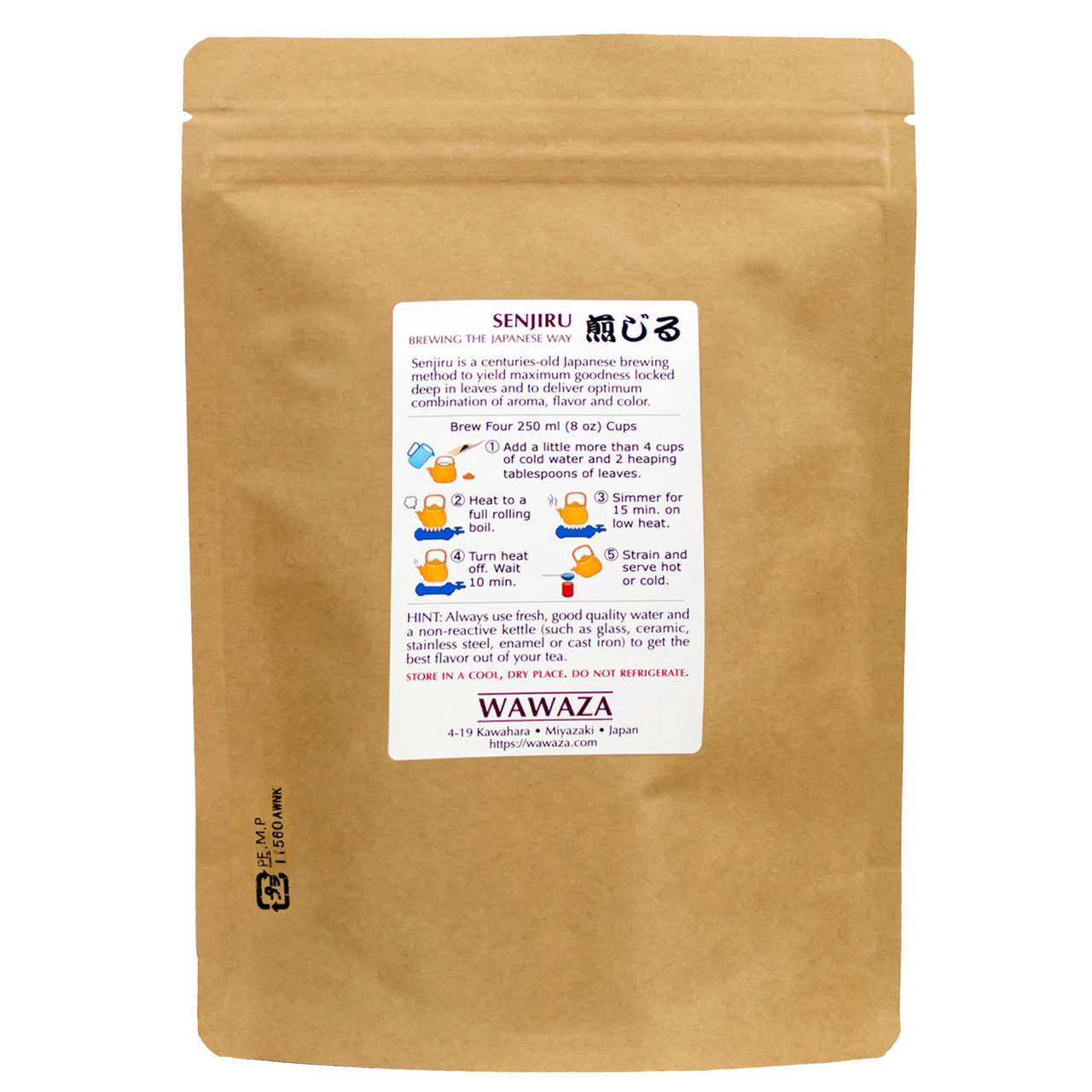
This traditional Japanese brewing method, called senjiru, yields a deeper infusion.
- Pour a little more than 4 cups of cold water into a pot.
- Add 2 heaping tablespoons of yomogi leaves.
- Heat to a full, rolling boil.
- Turn the heat down and simmer for 10 minutes.
- Turn the heat off and wait for 10 minutes.
- Strain and serve.
References
- Nihon Shoki (日本書紀), The Chronicles of Japan — Scroll 22, Empress Suiko, 19th year, fifth month.
- Inhibitory effect of eupatilin and jaceosidin isolated from Artemisia princeps in IgE-induced hypersensitivity — International Immunopharmacology, Vol. 7, Issue 13, Dec 2007, pp. 1678–1684.
- Anti-inflammatory effects of Artemisia princeps in antigen-stimulated T cells and regulatory T cells — Journal of Pharmacy and Pharmacology, Vol. 61, Issue 8, Aug 2009, pp. 1043–1050.
- In vitro antioxidant and anti-inflammatory activities of jaceosidin from Artemisia princeps Pampanini cv. Sajabal — Archives of Pharmacal Research, Vol. 31, Issue 4, Apr 2008, pp. 429–437.
- Artemisia leaf extract induces apoptosis in human endometriotic cells through regulation of the p38 and NF-κB pathways — Journal of Ethnopharmacology, Vol. 145, Issue 3, Dec 2012, pp. 767–774.
- Jaceosidin, isolated from dietary mugwort (Artemisia princeps), induces G2/M cell cycle arrest by inactivating cdc25C–cdc2 via ATM–Chk1/2 activation — Food and Chemical Toxicology, Vol. 55, May 2013, pp. 214–221.
- Eupafolin, a flavonoid isolated from Artemisia princeps, induces apoptosis in human cervical adenocarcinoma HeLa cells — Molecular Nutrition & Food Research, Vol. 54, Issue 9, Sep 2010, pp. 1318–1328.
- Artemisia princeps induces apoptosis in cervical cancer cells — Journal of Chengdu University of Traditional Chinese Medicine, 2015-01.
- Investigation of medicinal substances from in vitro cultured cells and leaves of Artemisia princeps var. orientalis — Korean Journal of Medicinal Crop Science, Vol. 13, Issue 3, 2005, pp. 69–76.
- Artemisia princeps var. orientalis induces apoptosis in human breast cancer MCF-7 cells — Anticancer Research, Vol. 27, No. 6B, Nov–Dec 2007, pp. 3891–3898.
- Induction of apoptosis by yomogin in human promyelocytic leukemia HL-60 cells — Biological and Pharmaceutical Bulletin, Vol. 27, No. 7, 2004, pp. 1106–1111.
- Synergistic induction of 1,25-dihydroxyvitamin D₃– and all-trans-retinoic acid–induced differentiation of HL-60 leukemia cells by yomogin, a sesquiterpene lactone from Artemisia princeps — Planta Medica, Vol. 68, Issue 10, Oct 2002, pp. 886–890.
8 Reviews Hide Reviews Show Reviews
-
Wonderful!
An exceptional product! The aroma is wonderful and the taste very pleasant. Helpful for inflammations and digestion problems. I'll order soon again.
-
The best herbal tea flavor I had
This is a lovely tea. It's mellow, but the flavor is excellent. Hard to describe. I enjoyed the ritual of making this tea very much. Every time I would make it, my husband would smell the fragrance in another room and ask for some. :)
-
Great
Best
-
Satisfied
I really like this tea. It has a herbal fresh taste and you sense it is doing you good as you drink it. And the amount is generous. The package arrived much sooner than i anticipated.
-
artemisia princess tea
Lovely fragrant relaxing enjoyment
-
Delicious
Love having this tea in the morning, it is nice and light. Wawaza even included a few gifts for me, which was super nice.
-
Delicious and Healthy
Delicious and Healthy , great for your skin. I love this company, all their products are top notch. Packaging is just beautiful, including the little gift they include. I enjoy this with the Detox tea.
-
Wonderfully refreshing
This tea is delicious. It has a greeny-lemony taste, very fresh and reviving. Unusual but good. Healthful and enjoyable.